| Frequency | Percent | Valid Percent | Cumulative Percent | ||
|---|---|---|---|---|---|
| Gender | Male | 123 | 44.9 | 44.9 | 44.9 |
| Female | 151 | 55.1 | 55.1 | 100.0 | |
| Total | 274 | 100.0 | 100.0 | ||
| Level of education | High school | 79 | 28.8 | 28.8 | 28.8 |
| Higher school | 31 | 11.3 | 11.3 | 40.1 | |
| Faculty | 110 | 40.1 | 40.1 | 80.3 | |
| Master | 50 | 18.2 | 18.2 | 98.5 | |
| PhD | 4 | 1.5 | 1.5 | 100.0 | |
| Total | 274 | 100.0 | 100.0 | ||
| Type of media organization in which you are employed | Print media | 49 | 17.9 | 17.9 | 17.9 |
| Television | 147 | 53.6 | 53.6 | 71.5 | |
| Radio | 27 | 9.9 | 9.9 | 81.4 | |
| Online media / portal | 47 | 17.2 | 17.2 | 98.5 | |
| News agency | 4 | 1.5 | 1.5 | 100.0 | |
| Total | 274 | 100.0 | 100.0 | ||
| Employment sector | Public | 26 | 9.5 | 9.5 | 9.5 |
| State sector | 248 | 90.5 | 90.5 | 100.0 | |
| Total | 274 | 100.0 | 100.0 | ||
| Work experience in the media sector | Less than 2 years | 18 | 6.6 | 6.6 | 6.6 |
| 2–5 years | 27 | 9.9 | 9.9 | 16.4 | |
| 6–10 years | 37 | 13.5 | 13.5 | 29.9 | |
| More than 10 years | 192 | 70.1 | 70.1 | 100.0 | |
| Total | 274 | 100.0 | 100.0 | ||
| Your position within the media organization | Journalist | 97 | 35.4 | 35.4 | 35.4 |
| Editor | 74 | 27.0 | 27.0 | 62.4 | |
| Producer | 10 | 3.6 | 3.6 | 66.1 | |
| Technical staff | 39 | 14.2 | 14.2 | 80.3 | |
| Management | 38 | 13.9 | 13.9 | 94.2 | |
| Other | 16 | 5.8 | 5.8 | 100.0 | |
| Total | 274 | 100.0 | 100.0 | ||
Only 13.1% of organizations reported that they regularly provide seminars and training programs for their employees, while 46.4% do so occasionally, 30.3% rarely, and 10.2% never.
A chi-square test of independence revealed a statistically significant association between responses to the question “Does your organization provide training programs/seminars for employees?” and the type of media in which respondents are employed, χ²(12, n = 274) = 24.756, p = 0.016, phi= 0.301.
As shown in Table 2 (Crosstabulation), the values of the Adjusted Residuals indicate that employees in print media were significantly less likely than expected to report Yes, regularly (Adjusted Residual = –2.5), while the category Never was significantly more frequent than expected (Adjusted Residual = 3.1). Conversely, for employees in television, the number of cases in the Never category was lower than expected.
Table 2 Crosstabulation
| Crosstab | Does your organization provide training programs/seminars for employees? | ||||||
|---|---|---|---|---|---|---|---|
| Yes, regularly | Occasionally | Rarely | Never | Total | |||
| Type of media organization in which you are employed | Print media | Count | 1 | 18 | 19 | 11 | 49 |
| % within type of media organization | 2.0% | 36.7% | 38.8% | 22.4% | 100.0% | ||
| Adjusted residual | -2.5 | -1.5 | 1.4 | 3.1 | |||
| Television | Count | 25 | 70 | 44 | 8 | 147 | |
| % within type of media organization | 17.0% | 47.6% | 29.9% | 5.4% | 100.0% | ||
| Adjusted residual | 2.0 | 0.5 | -0.1 | -2.8 | |||
| Radio | Count | 3 | 12 | 8 | 4 | 27 | |
| % within type of media organization | 11.1% | 44.4% | 29.6% | 14.8% | 100.0% | ||
| Adjusted residual | -0.3 | -0.2 | -0.1 | 0.8 | |||
| Online media / portal | Count | 7 | 23 | 12 | 5 | 47 | |
| % within type of media organization | 14.9% | 48.9% | 25.5% | 10.6% | 100.0% | ||
| Adjusted residual | 0.4 | 0.4 | -0.8 | 0.1 | |||
| News agency | Count | 0 | 4 | 0 | 0 | 4 | |
| % within type of media organization | 0.0% | 100.0% | 0.0% | 0.0% | 100.0% | ||
| Adjusted residual | -0.8 | 2.2 | -1.3 | -0.7 | |||
| Total | Count | 36 | 127 | 83 | 28 | 274 | |
| % within type of media organization | 13.1% | 46.4% | 30.3% | 10.2% | 100.0% | ||
Within media organizations, the most common form of employee professional development is internal training programs (39.8%), followed by external seminars (19.7%), conferences (16.8%), and self-directed learning (16.4%), while online courses are the least represented (7.3%).
A chi-square test of independence revealed a statistically significant association between the form of professional development and the type of media in which respondents are employed, χ²(16, n=274) = 28.580, p=0.027, phi=0.323. The highest proportion of employees in print media and television (42.9% each) reported participation in internal training programs. Employees in radio were most frequently engaged in external seminars, whereas those in news agencies were equally represented in external seminars and conferences (50% each). Online courses were reported only by employees in print media (14.3%) and online media/portals (12.8%), while in other media organizations they were negligibly represented.
Respondents evaluated the statement “Continuous education increases employee motivation” with an average score of 5.62, a median of 6, and a mode of 6. The first quartile (Q1) was 5, indicating that 25% of respondents rated the statement with 5 or lower, while the third quartile (Q3) was 7. The variable demonstrated relatively low variability (CV=26.71%) and strong negative skewness (Skewness=–1.102). This view was consistently expressed across gender, educational levels, organizational positions, employment sectors, and years of professional experience in the media. Among respondents who rated the statement with 5 or higher, the most frequently cited reason was “New knowledge increases confidence and self-assurance in job performance” (44%), followed by “Additional education creates a sense of personal and professional advancement” (34.67%), and “Employees feel valued when employers invest in their knowledge” (21.3%).
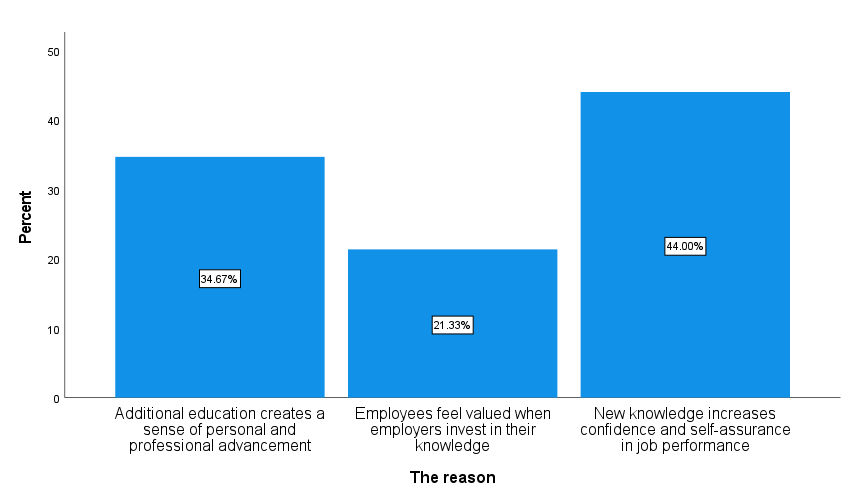
Graph 1 Reasons for the positive impact of continuous education on motivation
Source: Authors’ calculation
Respondents evaluated the statement “Media organizations that invest in knowledge adapt more easily to market changes” with a very high average score of 6.06, a Median of 6, and a Mode of 7. The variable exhibited strong negative skewness (Skewness=–1.521) and relatively low variability (CV=19.75%). This view was consistently expressed across gender, educational levels, organizational positions, employment sectors, and years of professional experience in the media. Among respondents who rated the statement with a score of 5 or higher, the most frequently cited reason was “Knowledge enables more efficient implementation of new business and technological models” (44%), followed by “The organization becomes more flexible and better prepared for competitive challenges” (30.8%), and “Employees respond more quickly to changes in audience and market needs” (25.2%).
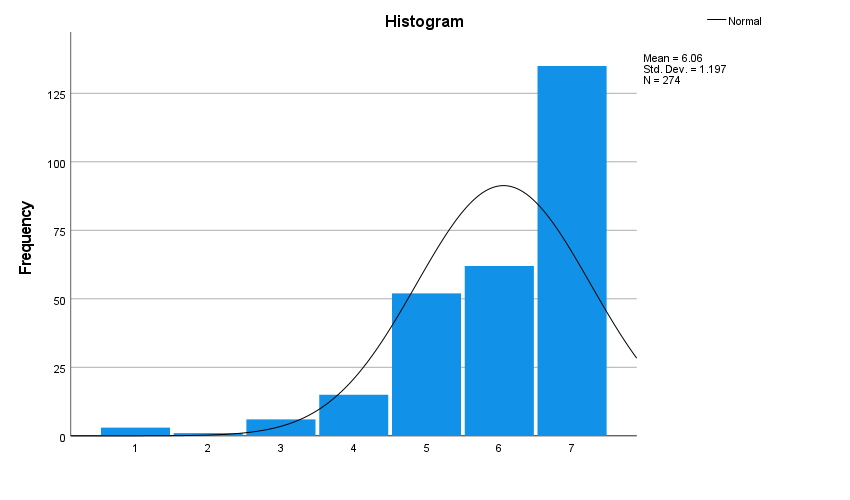
Graph 2 Assessment of the statement “Media organizations that invest in knowledge adapt more easily to market changes”
Source: Authors’ calculation
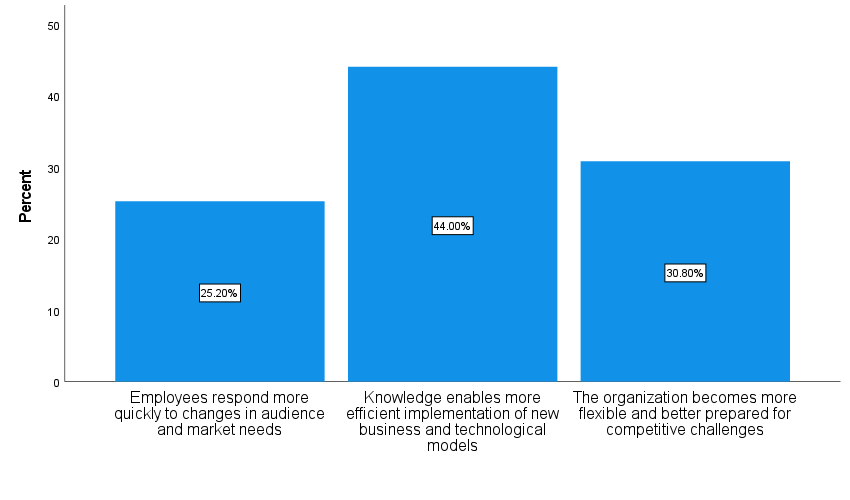
Graph 1 Reasons for the positive impact of investment in knowledge on adaptation to market changes
Source: Authors’ calculation
A strong linear relationship was observed between the items “Continuous education increases employee motivation” and “Media organizations that invest in knowledge adapt more easily to market changes”, with a correlation coefficient of r=0.714. Furthermore, significant linear associations were found between “Training programs and seminars improve the professional skills of employees” and “Continuous education increases employee motivation” (r=0.586), as well as between “Training programs and seminars improve the professional skills of employees” and “Media organizations that invest in knowledge adapt more easily to market changes” (r=0.579).
| 1 | 2 | 3 | 4 | |
|---|---|---|---|---|
| 1. Continuous education is essential for high-quality work in contemporary media | - | |||
| 2. Training programs and seminars improve the professional skills of employees | .424** | - | ||
| 3. Continuous education increases employee motivation | .393** | .586** | - | |
| 4. Media organizations that invest in knowledge adapt more easily to market changes | .412** | .579** | .714** | - |
CONCLUSION
This research study contributes to the development of future directions in human resource education within the media sector by identifying potential trends, emerging best practices, and key competencies required of media professionals in the contemporary digital environment. Particular emphasis is placed on a strategic approach to business operations, as well as on competencies of critical importance for the planning, implementation, and evaluation of training programs, grounded in an interdisciplinary approach and the principles of continuous professional development. In the context of accelerated and profound transformations of the media landscape, the need for new, innovative, and creative human resources is becoming increasingly pronounced. The research findings indicate that training and professional development programs in media organizations remain insufficiently systematic, as only 13.1% of organizations regularly organize seminars and training activities, while in the majority of cases such programs are implemented occasionally or rarely. Nevertheless, a statistically significant association between the frequency of training provision and the type of media confirms that the institutional approach to employee education depends on the media sector. These results demonstrate that the structural characteristics of media organizations influence employees’ educational practices. A significant relationship was also identified between the forms of employee professional development and the type of media, further confirming that different media sectors adopt different models of knowledge development. Internal training represents the most common form of professional development, particularly in print and television media, whereas external education programs and conferences are more characteristic of radio stations and news agencies. Online courses are poorly represented and largely limited to print and online media, indicating the underutilized potential of digital learning formats.
Regarding respondents’ attitudes, continuous education received a high mean score of 5.62, with a strong level of agreement among respondents regardless of gender, educational background, job position, employment sector, or work experience. The most significant reasons underlying this perception relate to increased self-confidence gained through new knowledge, a sense of professional advancement, and the perception of being valued by the organization. This pattern of responses clearly indicates that continuous education has a strong motivational effect on media employees, thereby confirming Hypothesis H1. The statement that media organizations investing in employees’ knowledge are better able to respond to market changes was rated with a very high mean score of 6.06, accompanied by low variability and a high degree of consensus across all sociodemographic and professional categories of respondents. Key reasons include more effective implementation of new business and technological models, greater organizational flexibility, and faster responses to changes in audience needs and market conditions. These findings clearly demonstrate that investment in knowledge represents an important mechanism of adaptability for media organizations, thus confirming Hypothesis H2.
LITERATURE
Becker, L., Vlad, T., & Martin, H. (2006). Change and Stability in the Newspaper Industry's Journalistic Labor Market. International Journal on Media Management, 8:1, 39-49.
Benabed, F., & Messaoudi, B. (2025). The role of contemporary human resource management in improving companies organizational performance. Pegem Journal of Education and Instruction, 15(4), 1872-1888.
Castells, M. (2010). The rise of the network society (2nd ed.). Wiley-Blackwell.
Costello, J. and Oliver, J.J. (2018). Human Resource Management in the Media. Handbook of Media Management and Economics (Media Management and Economics Series), Chapter 7, 95-110, Routledge.
Dabić, M., Frances Maley, J., Švarc, J., & Poček, J. (2023). Future of digital work: Challenges for sustainable human resource management, 8(2),1-9. Journal of Innovation & Knowledge. https://doi.org/10.1016/j.jik.2023.100353
Dessler, G. (2020). Human resource management (16th ed.). Pearson.
Deuze, M. (2007). Media work. Polity Press.
Drucker, P. F. (1999). Management challenges for the 21st century. HarperBusiness.
Hasan, M., Haque, A., Sharmin Nishat, S., & Hossain, M. (2024). Upskilling and Reskilling in a Rapidly Changing Job Market: Strategies for Organizations to Maintain Workforce Agility and Adaptability. European Journal of Business and Management Research, 9(6), 118-126. https://doi.org/10.24018/ejbmr.2024.9.6.2502
Holistique Training. (2023, June 1). The importance of HR marketing: Building a strong workforce. Retrieved from https://holistiquetraining.com/en/news/the-importance-of-hr-marketing-building-a-strong-workforce
Huynh, M. S. (2024). Human resources in the knowledge economy: Training and developing modern management skills. International Journal of Multidisciplinary Research and Analysis, 7(7), 3260–3268.
https://doi.org/10.47191/ijmra/v7-i07-25
Organisation for Economic Co-operation and Development (OECD). (2019). Getting skills right: Future-ready adult learning systems. OECD Publishing. https://doi.org/10.1787/9789264311756-en
Pavlik, J. V. (2013). Innovation and the future of journalism. Columbia University Press.
Rode, J. C., Huang, X., & Roge, R. (2022). Human resources practices and continuous improvement and learning across cultures. Journal of International Management, 28(4), 100972.
https://doi.org/10.1016/j.intman.2022.100972
Siocon, G. (2023). Why is human resources important? 8 top reasons. Academy to Innovate HR. Retrieved from https://www.aihr.com/blog/why-is-human-resources-hr-important/
Westover, J. H. (2025). The Future of HR Education. Human Capital Leadership Review, 17(3).
https://doi.org/10.70175/hclreview.2020.17.3.1.2
Zhang J, & Chen Z. (2023). Exploring Human Resource Management Digital Transformation in the Digital Age. Journal of the Knowledge Economy, 15, 1482-1498. https://doi.org/10.1007/s13132-023-01214-y